
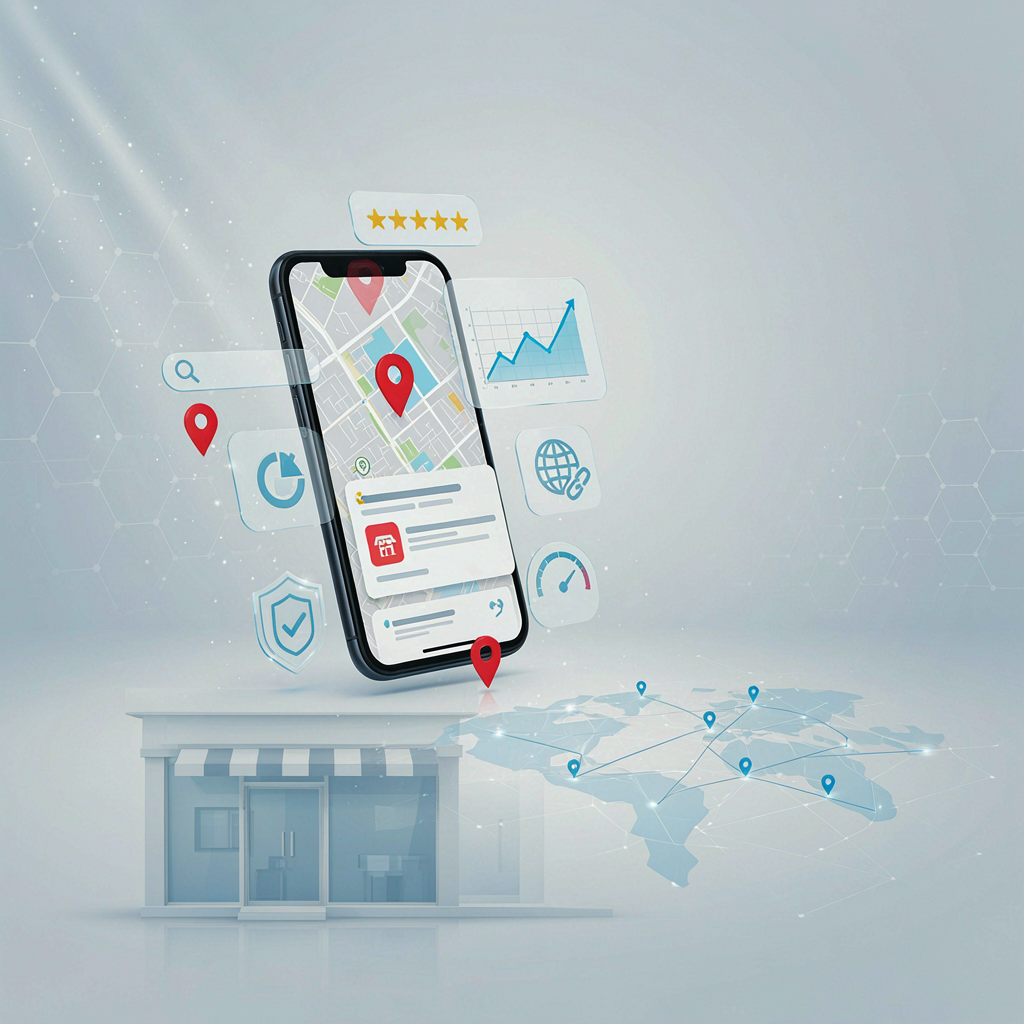
How Relevance, Distance and Prominence Shape Local Rankings
Local search has become one of the most important ways customers discover nearby businesses. Whether someone searches for “SEO agency near me,” “best restaurant in Oulu,” or a specific service in their city, search engines need to determine which local businesses are the most useful and trustworthy options. This is where three major concepts come into play: relevance, distance, and prominence.
Understanding these factors can help businesses build a stronger local search presence instead of relying only on traditional keyword optimization. Local SEO is no longer simply about adding a city name to a website. It involves creating accurate business information, demonstrating expertise, earning trust, and making it easy for search engines to understand what a business offers and where it operates.
For businesses competing in local markets, these principles provide a practical framework for improving visibility across Google Search and Maps.
Understanding Relevance in Local SEO
Relevance in local SEO refers to how closely a business matches what a customer is searching for. Search engines want to show businesses that genuinely provide the product, service, or solution mentioned in the search query.
For example, if a person searches for “technical SEO services in Finland,” a company that clearly describes technical SEO as one of its core services is more relevant than a general business website that only mentions SEO once. Relevance is therefore strongly connected to how clearly a business communicates its services.
A well-optimized Google Business Profile can support this process by providing accurate categories, services, business descriptions, and other useful information. The website should reinforce the same message through service pages, location information, helpful content, and clear navigation.
Consistency matters as well. If a business describes itself as an SEO agency on its website but uses unrelated categories or descriptions elsewhere, search engines may have a harder time understanding its primary offering.
The goal is not to repeatedly insert keywords. Instead, businesses should make their expertise and services naturally clear. This creates a stronger connection between customer intent and the business.
Why Distance Is a Major Ranking Factor
The second major consideration is the distance ranking factor. Local search is inherently geographic, so search engines need to estimate how close a business is to the person searching or to the location included in the query.
Imagine two people searching for “coffee shop near me.” They are unlikely to receive exactly the same results if they are several kilometres apart. A business located conveniently close to one searcher may be a much more useful result than a business located farther away.
Distance does not mean a business can only rank in its immediate neighbourhood. However, geographic proximity can influence visibility, particularly for searches that have strong local intent.
Businesses should therefore make their location information clear and accurate. Their Google Business Profile, website, contact details, and other legitimate online references should provide consistent location signals.
For service-area businesses, the situation can be slightly different because they may serve customers across a wider geographic region without having physical locations in every area. In these cases, clearly communicating service areas and creating genuinely useful local content can help establish geographic relevance without creating misleading location pages.
Prominence and the Power of Online Reputation
While relevance explains whether a business matches the search and distance helps establish geographic usefulness, prominence focuses on how well-known and trusted that business appears to be.
Prominence can be influenced by several factors, including online mentions, reviews, links from reputable websites, brand recognition, and the overall authority of a business's digital presence.
A business with a strong reputation across the web may have an advantage over an otherwise similar business with little online recognition. This is one reason why local SEO should not be treated as a Google Business Profile-only strategy.
Reviews can also contribute to the overall credibility of a local business. Genuine customer feedback can demonstrate that people interact with and value the company. However, businesses should focus on delivering excellent service and encouraging authentic reviews rather than attempting to manipulate ratings.
Authority-building activities can also strengthen prominence. Relevant industry publications, local organizations, business directories, community websites, and credible websites may provide valuable references when they genuinely relate to the business.
How Maps Ranking Signals Work Together
People often search for businesses through Google Maps rather than traditional search results, making Maps ranking signals especially important for local visibility.
Maps rankings are not determined by one isolated factor. Search engines evaluate multiple signals to decide which businesses are useful for a particular query. Relevance, distance, and prominence can interact rather than operate independently.
For example, a highly prominent business may have strong authority but still be less suitable for a searcher located far away. Similarly, a business that is extremely close to the searcher may not appear prominently if its services do not match the query.
This means local SEO requires balance. Businesses need accurate information, clear service positioning, strong reputation signals, and an authentic geographic presence.
Google Business Profile optimization is an important part of this process, but it should work alongside website optimization and broader digital marketing efforts. Service pages, useful local content, structured business information, reviews, and reputable citations can collectively help search engines understand the business more effectively.
Building a Stronger Local SEO Strategy
A successful local SEO strategy begins with accuracy. Businesses should make sure their name, address, phone number, website, categories, services, and operating information are correct wherever they appear online.
The next step is developing content around real customer needs. Instead of producing dozens of nearly identical location pages, businesses can create useful resources that answer questions customers actually ask. Location-specific service pages can be valuable when they contain original information and genuinely serve users in that area.
Technical website quality also matters. A website that loads efficiently, works well on mobile devices, uses logical internal linking, and provides a clear user experience gives visitors a better journey after they discover the business through search.
Reputation should be developed at the same time. Businesses can encourage satisfied customers to leave honest feedback, participate in relevant local communities, and build relationships that naturally lead to credible online mentions.
For an SEO-focused company such as Dexora Digital, combining these approaches can create a more sustainable foundation for local visibility. Modern local SEO is less about trying to exploit individual ranking factors and more about demonstrating that a business is relevant, accessible, credible, and useful.
Why Local Rankings Require a Long-Term Approach
Local rankings can change because search behavior, competition, business information, and search engine systems are constantly evolving. A business that ranks well today cannot assume the same position will remain permanent.
That is why local SEO should be treated as an ongoing process rather than a one-time optimization project. Businesses should regularly review their profiles, update outdated information, publish genuinely useful content, monitor customer feedback, and strengthen their authority within their industry and community.
Most importantly, businesses should remember that local rankings ultimately exist to connect people with useful businesses. When a company provides accurate information, serves its customers well, builds a credible reputation, and clearly communicates its services, its SEO strategy becomes aligned with the purpose of local search.
Final Thoughts
Relevance, distance, and prominence form a powerful framework for understanding local search visibility. Relevance in local SEO helps search engines identify whether a business matches the customer's intent. The distance ranking factor helps determine geographic usefulness, while prominence reflects the strength and credibility of a business within the wider online ecosystem.
Rather than focusing on shortcuts, businesses should build a complete local presence based on accuracy, helpful content, strong customer experiences, and genuine authority. When these elements work together, businesses have a stronger opportunity to improve their visibility in Google Search and Maps and attract customers who are actively looking for what they offer.










0 Comments